
© TMBW, Foto: Stefan Kuhn
Federseemuseum Bad Buchau and Pfahlbaumuseum Unteruhldingen
Back to the Stone and Bronze Ages
2.10.20264 min. read time
At Federseemuseum Bad Buchau and Pfahlbaumuseum Unteruhldingen on Lake Constance, we immerse ourselves in everyday life during the Stone and Bronze Ages through hands-on experiences.
Federseemuseum Bad Buchau
Where Reindeer Hunters Settled Down
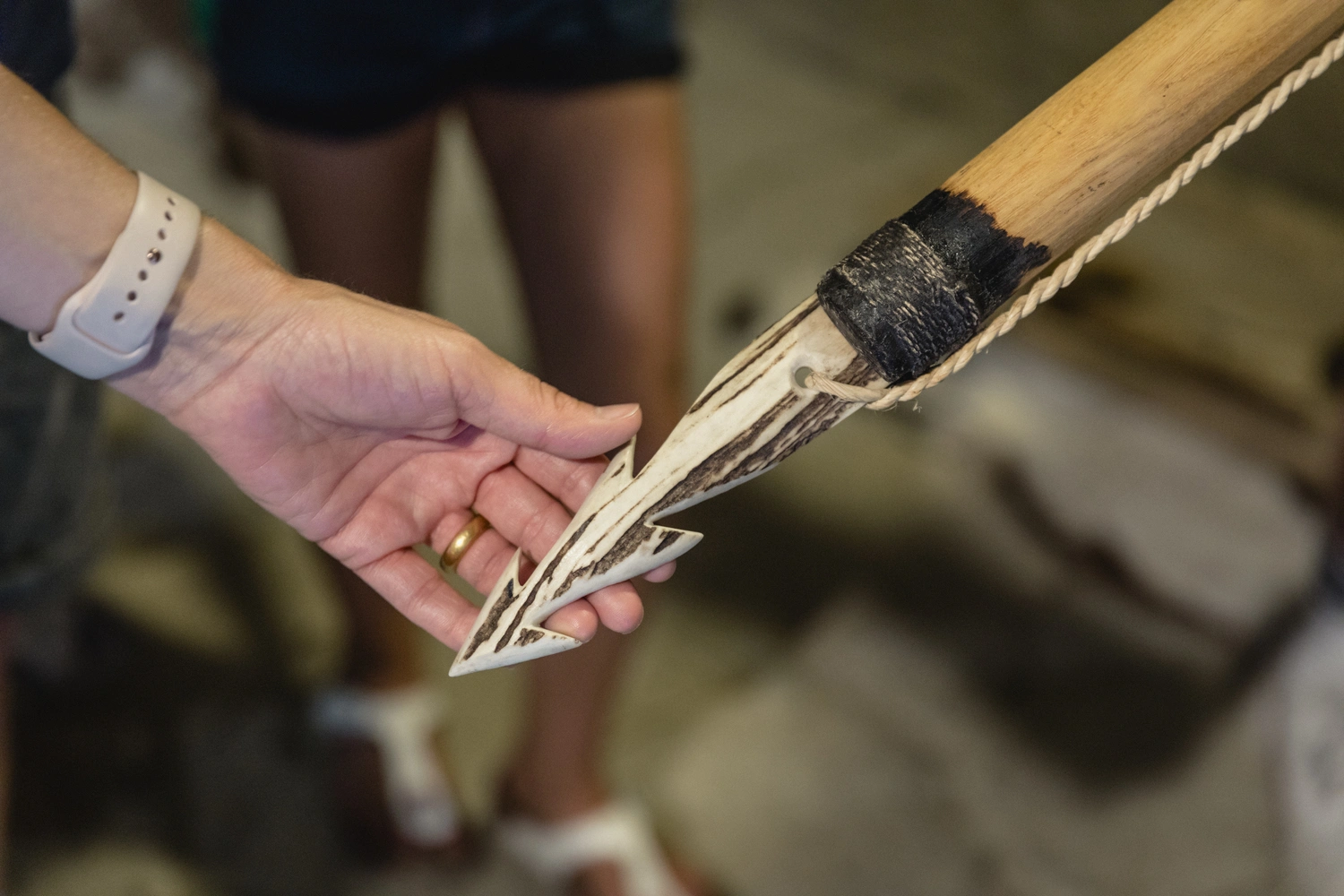
At Federseemuseum Bad Buchau and the Pfahlbaumuseum on Lake Constance, everyday life in the Stone and Bronze Ages comes vividly to life. It turns out that people in the Stone Age already had their own version of a Swiss Army knife. A flint blade cuts through leather like butter. Flint is harder and sharper than steel—and can also be used to strike sparks.Visitors can try it for themselves on the Family Activity Trail, a journey of discovery into our prehistoric past in the outdoor grounds of Federseemuseum Bad Buchau. Turn left to enter the Stone Age or right to explore the Bronze Age. Over just a few hundred metres, the trail takes visitors through thousands of years of human history in the Federseemoor wetlands. After the end of the Ice Age, reindeer hunters settled here permanently. They drove timber piles into the soft peat and built their houses on top: pile dwellings.
© TMBW, Foto: Stefan Kuhn
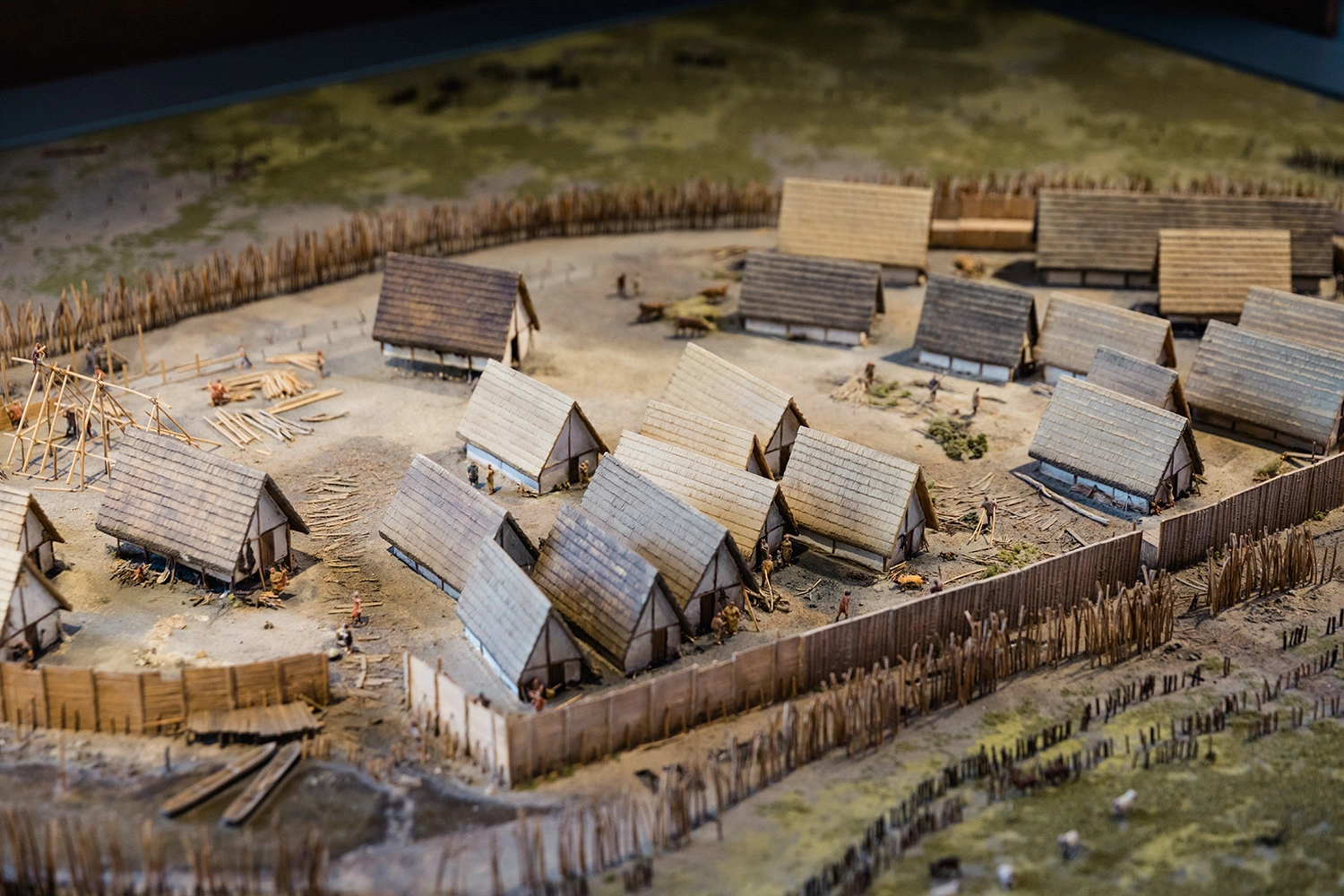
A village in miniature
The detailed model at Federseemuseum Bad Buchau shows what the fortified Forschner settlement on Lake Federsee might once have looked like.
UNESCO Pile Dwellings at Federsee & Lake Constance
Following in Our Ancestors’ Footsteps with a Research Backpack and Riddles
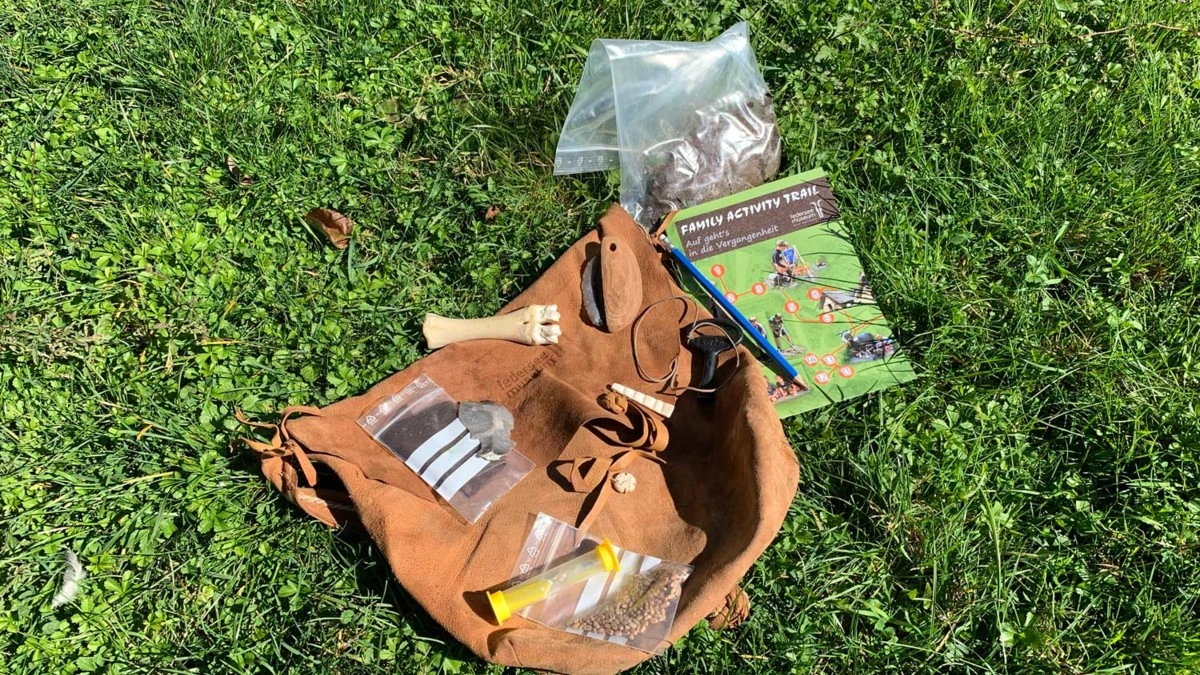
More than 900 sites containing settlements of this kind have been discovered across the Alpine and pre-Alpine regions. Of these, 111 form the UNESCO World Heritage Site known as the Prehistoric Pile Dwellings around the Alps, including 15 in Baden-Württemberg. What makes them so remarkable is their location beside peatlands and lakes, where oxygen-depleted layers of peat and silt preserved entire worlds like a time capsule. They contain not only artefacts made from stone or metal, but also organic materials: house posts, flax fibres for clothing, fishing nets, dugout canoes, grain, Stone Age chewing gum and even the remains of a fish soup that simmered over an open fire around 5,000 years ago.Federseemoor, a wetland surrounding Lake Federsee, and Lake Constance are home to some of the best-known archaeological sites. The museums in Bad Buchau and Unteruhldingen offer a vivid window into this past. They have brought the submerged villages back to light. At Federseemoor alone, more than 20 settlements and over 50 dugout canoes—the means of transport at the time—have already been discovered. These finds have enabled the houses to be reconstructed, making life in that period tangible. And that is precisely what the Family Activity Trail is all about. Equipped with a map and a research backpack available from the ticket desk, visitors can discover what everyday life was like at 14 activity stations. Two of the items inside are the Stone Age equivalent of a Swiss Army knife and a piece of leather. Along the way, there are hands-on challenges and riddles to solve. For example, how did people cook soup over a fire before they had pots made from clay or metal?
© Fouad Vollmer
© TMBW, Foto: Stefan Kuhn
© Dorothee Fauth
Stone and Bronze Ages at Federseemuseum Bad Buchau
Grinding Grain, Milking a Goat and Paddling a Dugout Canoe
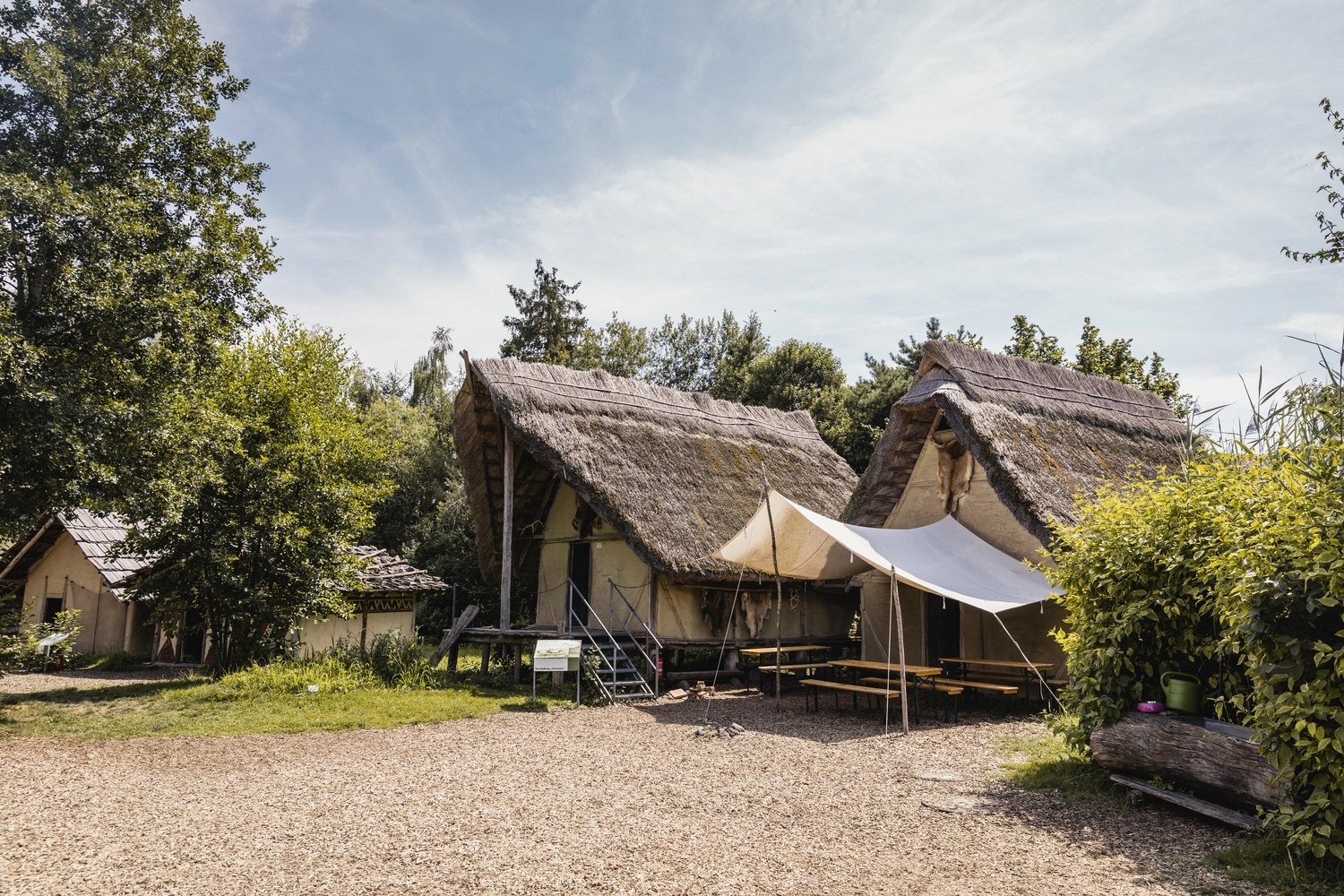
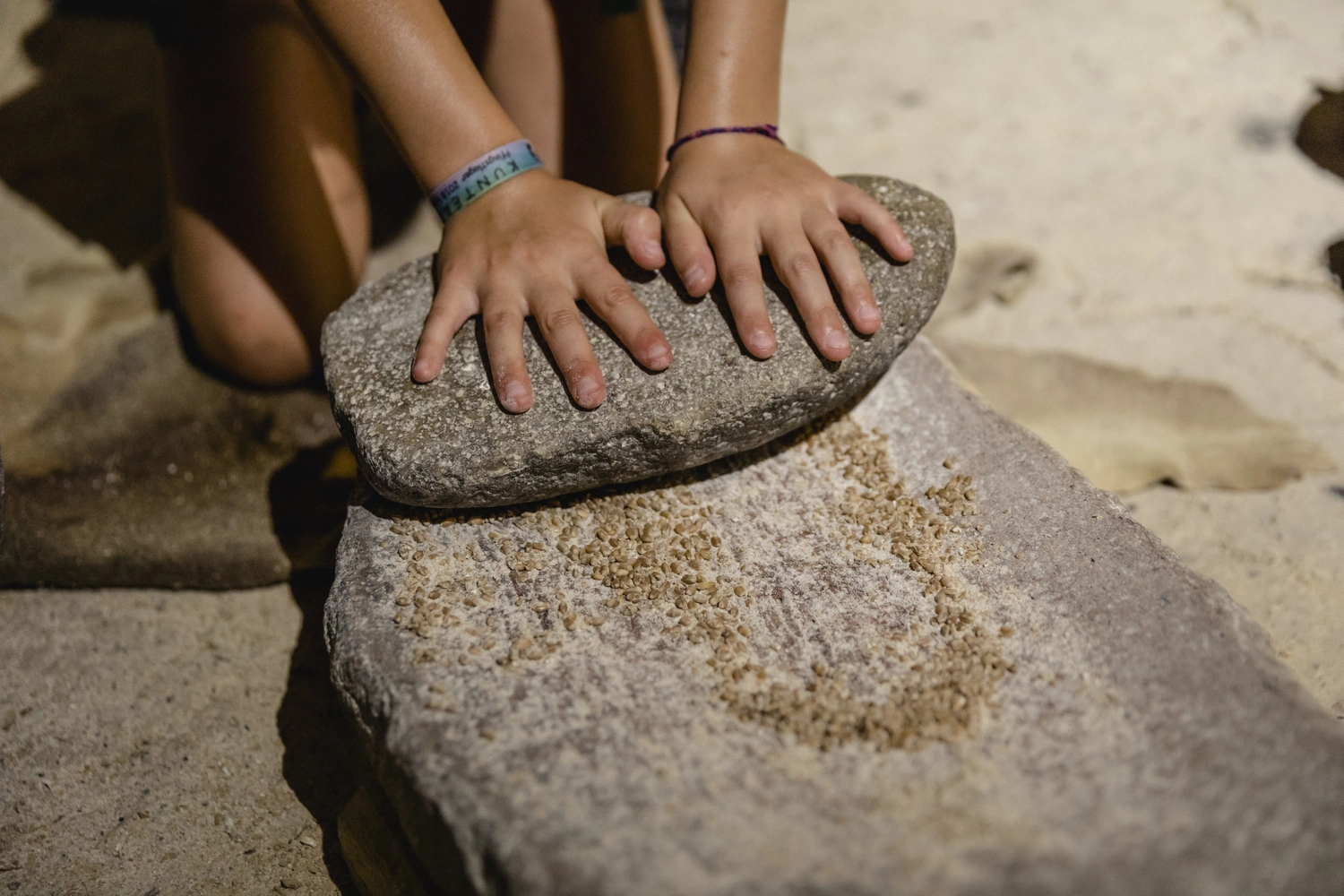
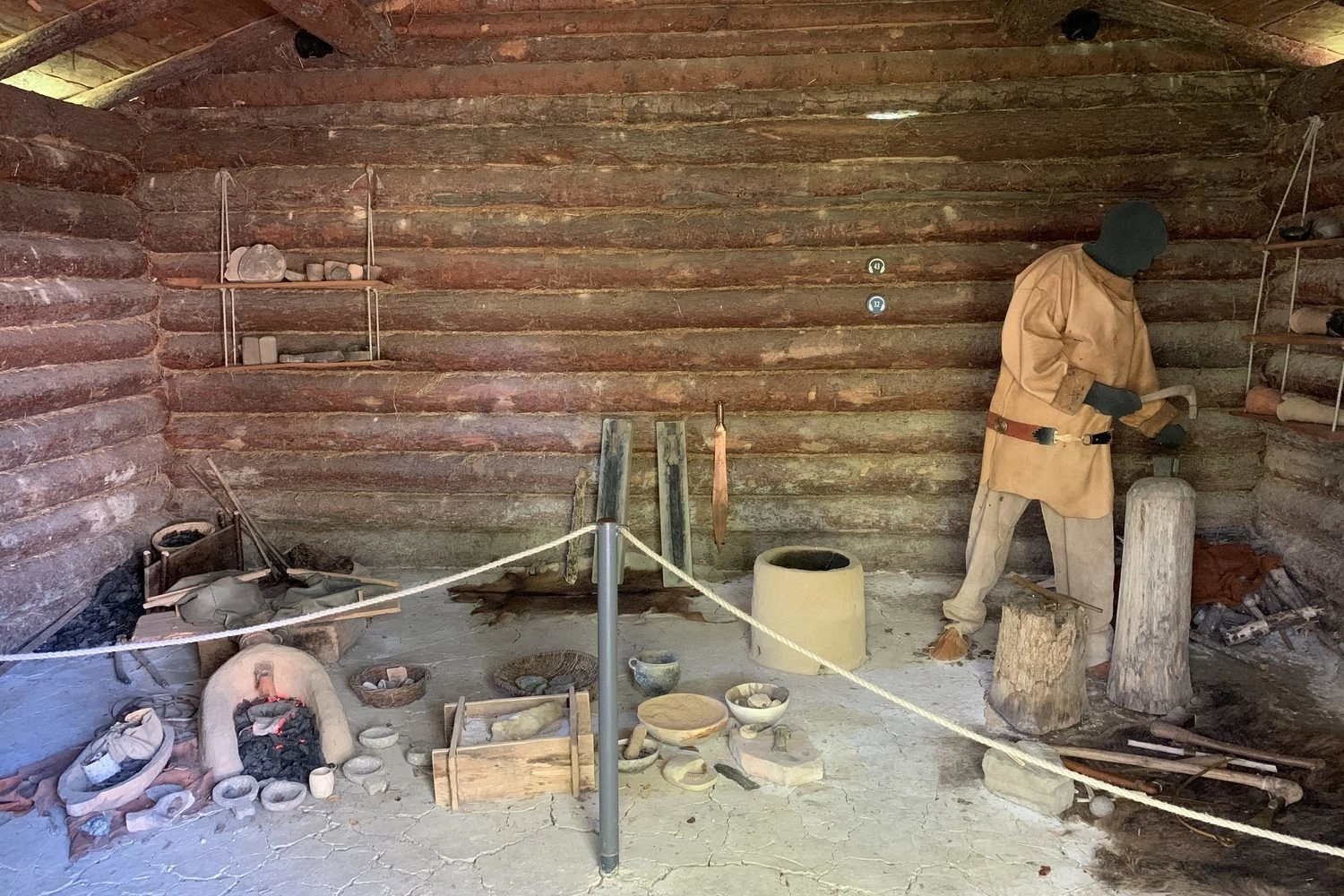
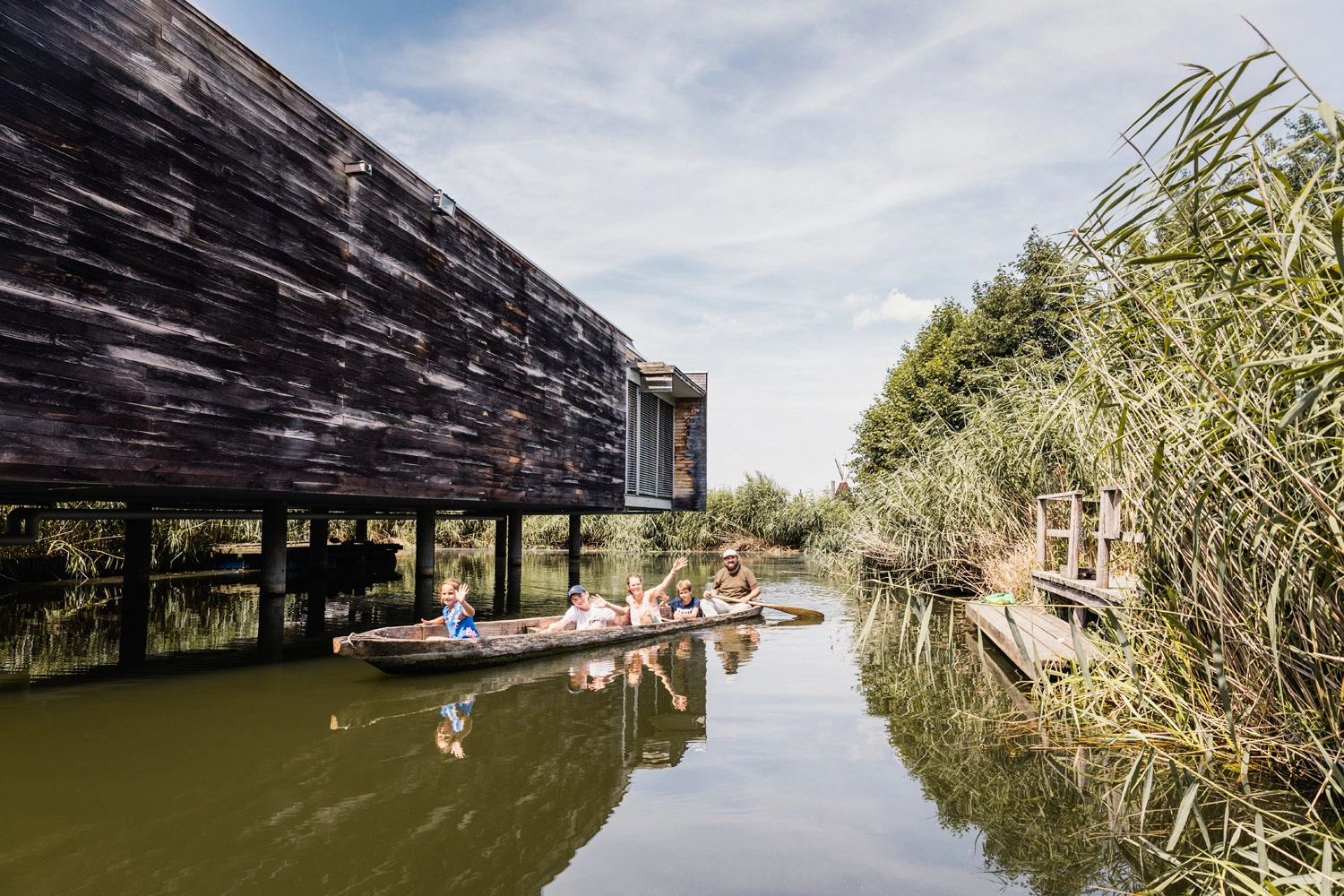
Grain was the most important staple food in the Stone Age. But it not only had to be grown—it also had to be ground. Visitors can discover just how arduous this was at the Early Neolithic settlement of Taubried. With grain and an hourglass from the research backpack, they have three minutes to grind the grain as finely as possible on a saddle quern. They also learn that a Stone Age home was packed to the rafters—with the whole family, an oven, a hearth, household objects, weapons, sleeping areas and stores of harvested crops.A short detour through the Late Neolithic leads to the domesticated livestock of the time. Goats and sheep provided milk, while cattle mainly served as four-legged tractors, as our ancestors were lactose-intolerant. Olga the plastic goat patiently lets visitors try their hand at milking her.The Bronze Age brought fundamental changes. People began to trade, importing glass beads from Italy, amber from the Baltic, salt from Hallstatt and horses from the Russian steppe—the SUVs of the upper classes, so to speak. For the first time, there was wealth worth protecting, whether with locks and keys or swords. Tin from England and copper from the Eastern Alps made it possible to cast metal. Bronze smiths were the prehistoric equivalent of Silicon Valley, producing tools, jewellery and weapons of unprecedented quality.Children crowd around a wardrobe to dress up in Stone and Bronze Age fashions: linen shirts, leather leggings, bast-fibre cloaks and fur hats. There is just enough time for a quick selfie in front of the mirror before they move on to the final station. Here, they wet-sieve a soil sample to uncover the final letter of a code that unlocks a surprise … At weekends, museum visitors can also try spear-throwing and paddle a dugout canoe across the pond.
© TMBW, Foto: Stefan Kuhn
© TMBW, Foto: Stefan Kuhn
© TMBW, Foto: Stefan Kuhn
© TMBW, Foto: Stefan Kuhn
Pfahlbaumuseum Unteruhldingen on Lake Constance
A Journey Back in Time: Touch, Try, and Enjoy
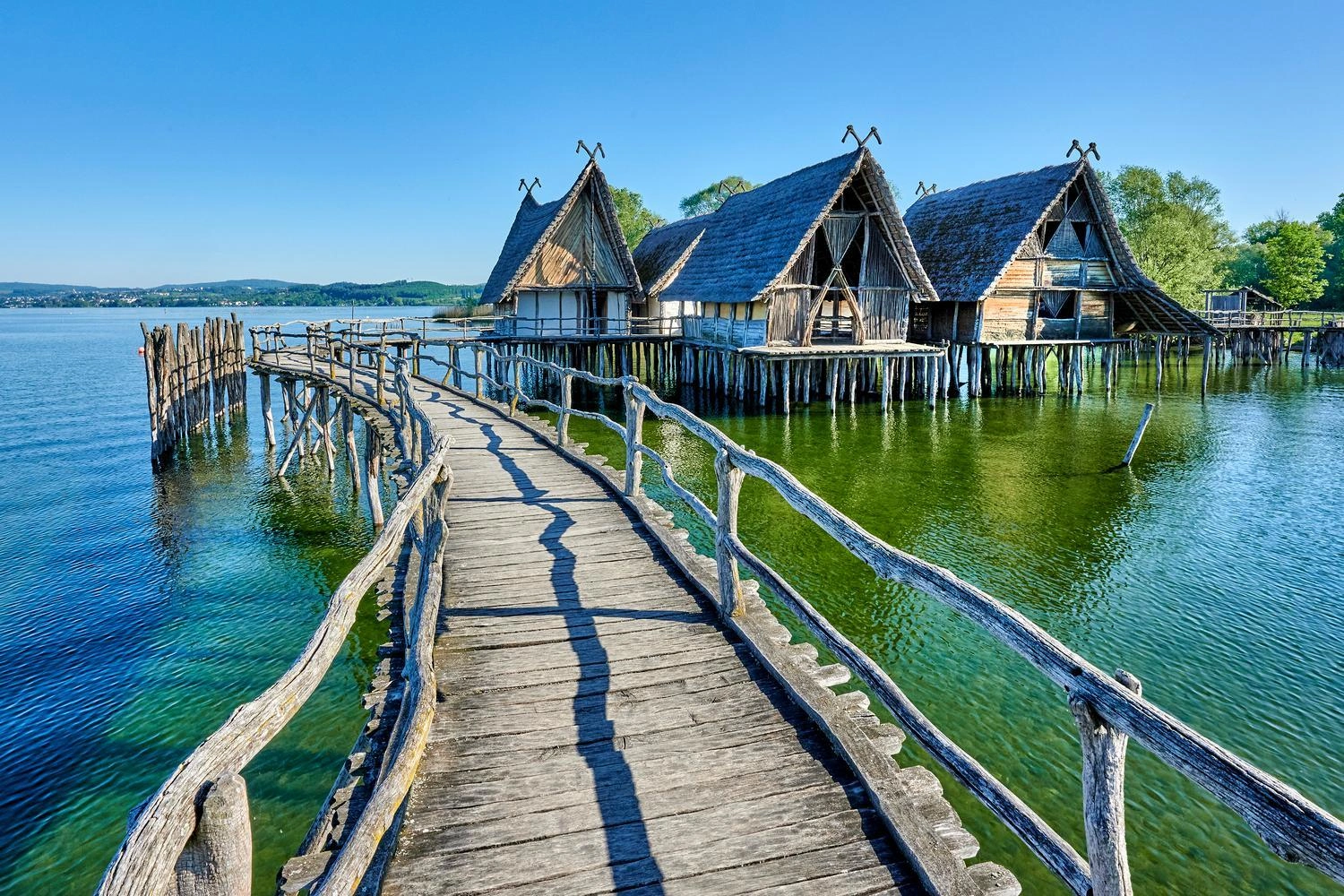
Our ancestors chose the moorland and lakes as places to settle for good reason. They served as trade routes, provided plentiful food and offered protection from enemies. While the piles supporting the houses at Lake Federsee were driven into the peat, those at Lake Constance can still be seen standing in the water. The journey back in time at Pfahlbaumuseum Unteruhldingen begins in the ARCHAEORAMA. A 360-degree multimedia show takes visitors down to the fields of piles on the lake bed before bringing them back up into the heart of everyday life in a virtual village.Then a gate opens. A boardwalk leads to 23 Stone and Bronze Age houses featuring recreated scenes of daily life. Visitors can experience the world of the pile dwellers with all their senses - on a trail where flint knives are made and cereal porridge and Stone Age fish soup are cooked. Looking up along the way reveals the snow-capped peaks of the Swiss Alps on the blue horizon. There were certainly worse places to live.
© DBT, Foto: Florian Trykowski
A boardwalk into the past
The reconstructed houses at Pfahlbaumuseum Unteruhldingen show how people lived on Lake Constance during the Stone and Bronze Ages.
FAQs About Federseemuseum Bad Buchau
Plan Your Journey Through 15,000 Years of History